

-
6,812 m
-
March, April, may, September, October & November
-
Hotel, Teahouse, and Camp
-
Peak Climbing
Overview
The Ama Dablam Expedition is one of Nepal’s most spectacular and technically demanding Himalayan climbing adventures. Rising to 6,812 meters / 22,349 feet, Ama Dablam is widely recognized for its dramatic pyramid-shaped profile and is often called the “Matterhorn of the Himalayas.”
Located in Nepal’s Everest region, the mountain rises above the Sherpa villages of Tengboche and Pangboche. Its elegant ridges, steep rock faces, snow slopes and exposed climbing sections make it one of the most sought-after peaks for experienced mountaineers.
This 28-day expedition begins in Kathmandu and follows the classic Everest-region approach from Lukla. The trekking route passes through Phakding, Namche Bazaar and Tengboche before reaching Ama Dablam Base Camp at approximately 4,600 meters.
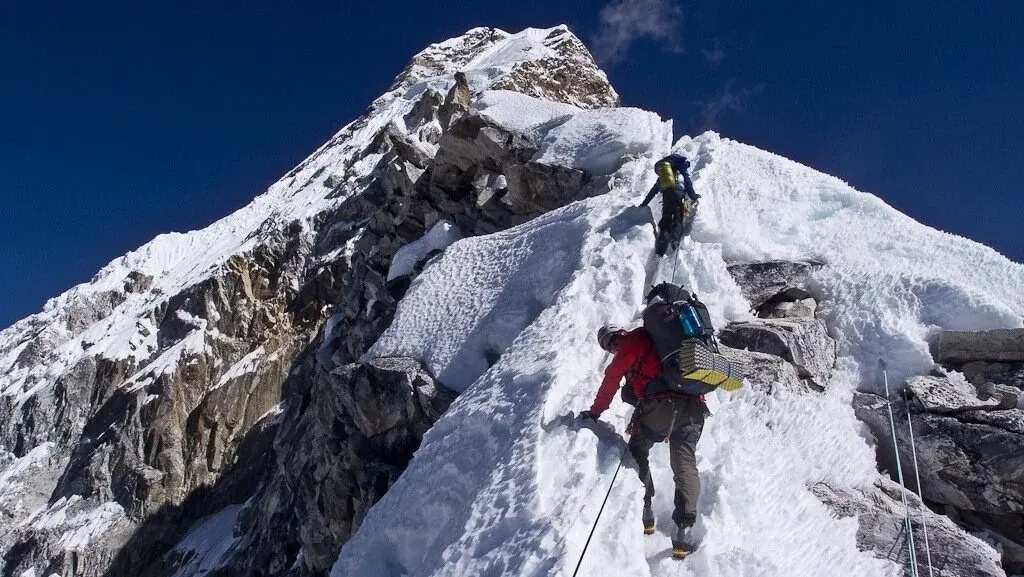
The expedition then enters its main climbing phase. Climbers acclimatize through rotations between Base Camp and higher camps before attempting the summit. The standard Southwest Ridge involves technical rock, snow and ice climbing, fixed ropes, exposed ridges and steep sections including the famous Yellow Tower and Mushroom Ridge.
From the summit, climbers are rewarded with an extraordinary panorama of Everest, Lhotse, Nuptse, Makalu, Cho Oyu, Pumori and other Himalayan peaks.
Ama Dablam is a serious mountaineering expedition and is recommended only for climbers with previous high-altitude and technical climbing experience.
Highlights
- Climb one of Nepal's most iconic Himalayan peaks
- Follow the challenging Southwest Ridge route
- Scenic flight from Kathmandu to Lukla
- Trek through the legendary Everest region
- Experience traditional Sherpa culture and hospitality
- Explore Namche Bazaar and Tengboche
- Experience traditional Sherpa culture and hospitality
- Visit Tengboche Monastery
- Establish a fully supported Ama Dablam Base Camp
- Acclimatization rotations between Base Camp and higher camps
- Climb technical rock, snow and ice sections
- Cross the exposed Mushroom Ridge
- Enjoy spectacular views of Everest, Lhotse, Nuptse, Makalu and Pumori
- Professional expedition leadership and high-altitude Sherpa support
Itinerary
Welcome to Nepal.
Upon arrival at Tribhuvan International Airport, our representative will meet you and transfer you to your hotel in Kathmandu.
After checking in, you can rest and recover from your journey or explore the surrounding area.
In the evening, you will meet the expedition team and receive an initial briefing about the upcoming adventure.
Today is dedicated to expedition preparation.
You will meet the expedition leader and climbing team, review your equipment and complete any necessary shopping or rental arrangements in Kathmandu.
The team will discuss the route, climbing strategy, acclimatization schedule, safety procedures, weather considerations and expedition logistics.
Any final permit or documentation requirements will also be completed.
Early in the morning, take a scenic flight toward Lukla.
After landing, meet the trekking crew and begin walking through the Dudh Koshi Valley.
The trail passes through forests, small Sherpa settlements and suspension bridges before reaching Phakding.
This relatively short trekking day allows you to begin adapting to the Himalayan environment.
Continue along the Dudh Koshi River toward Namche Bazaar.
The trail enters Sagarmatha National Park and crosses several suspension bridges.
After passing through pine and rhododendron forests, the trail climbs steadily toward Namche Bazaar.
Namche is the commercial and cultural center of the Khumbu region and an important acclimatization stop.
Today is dedicated to acclimatization.
Take a short hike to higher viewpoints around Namche before returning to the town.
This active acclimatization helps your body adapt to the increasing altitude.
You can also explore Namche Bazaar and experience the Sherpa culture and mountain lifestyle.
The trail follows a beautiful ridge with impressive views of Everest, Lhotse, Nuptse, Ama Dablam and Thamserku.
After descending toward the Dudh Koshi River, climb through forests toward Tengboche.
Tengboche is famous for its historic Buddhist monastery and spectacular mountain surroundings.
Today you leave the main Everest trail and head toward Ama Dablam Base Camp.
The trail passes through the beautiful Khumbu landscape with Ama Dablam dominating the skyline.
As you approach Base Camp, the mountain's impressive ridges and technical climbing sections become increasingly visible.
After reaching Base Camp, settle into the expedition camp and meet the Base Camp support team.
The following days are dedicated to acclimatization, technical preparation, climbing rotations and the summit attempt.
The exact schedule is flexible because high-altitude climbing depends on weather, route conditions, acclimatization and the condition of the team.
Base Camp Preparation
At Base Camp, the expedition team will:
- Conduct health and acclimatization checks
- Review climbing equipment
- Practice rope techniques
- Review emergency procedures
- Monitor weather forecasts
- Prepare food and supplies
- Organize climbing loads
- Establish communication systems
- Prepare for rotations to higher camps
Climbing Rotation
The team progressively moves between Base Camp and higher camps to improve acclimatization.
A typical rotation may include:
Base Camp → Camp 1 → Camp 2 → Camp 3 → return to lower altitude → rest → second rotation → summit attempt
The actual rotation schedule can change according to weather and mountain conditions.
Camp 1 – 5,700 m
The team climbs from Base Camp toward Camp 1.
This section includes rock scrambling and increasingly steep terrain.
After reaching Camp 1, climbers spend time acclimatizing before descending or continuing according to the expedition plan.
Camp 2 – 5,950 m
The route becomes significantly more technical above Camp 1.
Climbers negotiate exposed rocky terrain and technical sections before reaching the Yellow Tower.
The team uses fixed ropes where required.
Camp 2 is located on narrow and exposed terrain, requiring careful movement and strong climbing skills.
Camp 3 – 6,200 m
The route above Camp 2 transitions into mixed rock, snow and ice.
The famous Mushroom Ridge presents another challenging section before reaching Camp 3.
Because of the altitude and exposure, climbers normally spend only limited time at Camp 3 before beginning the summit push.
Summit Attempt – 6,812 m
The summit attempt begins according to weather and route conditions.
The climb includes steep snow and ice sections and requires advanced use of crampons, ice axe, ascender, harness and fixed ropes.
After reaching the summit, climbers enjoy spectacular views across the Himalayas.
The descent is undertaken carefully toward the lower camps.
After completing the climbing phase, begin the descent toward Namche Bazaar.
The trail follows the Khumbu Valley through beautiful mountain landscapes and Sherpa villages.
After several hours of trekking, reach Namche Bazaar and enjoy a comfortable evening.
Today is the final trekking day.
Follow the trail through forests and Sherpa villages, crossing suspension bridges and descending along the Dudh Koshi Valley.
After reaching Lukla, enjoy your final evening in the Everest region with the expedition team.
After breakfast, take your return flight from Lukla toward Kathmandu or Ramechhap, depending on current flight operations.
Upon arrival, transfer to your hotel in Kathmandu.
The remainder of the day is free for relaxation.
Enjoy a free day in Kathmandu after completing the expedition.
You can explore Thamel, visit cultural sites, purchase souvenirs or simply relax at your hotel.
In the evening, enjoy a farewell dinner celebrating the completion of your Ama Dablam Expedition.
Your Ama Dablam Expedition comes to an end today.
Depending on your flight schedule, our representative will transfer you to Tribhuvan International Airport for your onward journey.
Take home unforgettable memories of one of the Himalayas' most spectacular mountains.
Includes/Excludes
Includes
- Airport transfers according to the itinerary
- Hotel accommodation in Kathmandu on a bed-and-breakfast basis
- Kathmandu–Lukla–Kathmandu flights
- Teahouse accommodation during the approach trek
- Expedition accommodation at Base Camp and higher camps
- Three meals daily during the trekking and climbing period
- Tea and coffee during trekking and climbing
- Experienced expedition leader
- Experienced high-altitude Sherpa climbing guides
- Required porters and support staff
- Ama Dablam climbing permit
- Sagarmatha National Park entry permit
- Khumbu Pasang Lhamu Rural Municipality permit/fees
- Expedition royalty and applicable government fees
- Base Camp kitchen and dining facilities
- Base Camp and expedition tents
- Cooking and kitchen equipment
- Expedition food and supplies
- Required group climbing equipment
- Fixed ropes and climbing hardware arranged by the expedition team
- Base Camp communication facilities
- Weather information and forecasting support
- First-aid and basic medical equipment
- High-altitude safety equipment as specified in the expedition package
- Necessary cargo and expedition logistics
- Porter/yak transportation of expedition supplies where applicable
- Government taxes and service charges
- Pre-expedition briefing
- Trekking and climbing maps where provided
Excludes
- International airfare
- Nepal visa fee
- Personal travel insurance
- High-altitude rescue and helicopter evacuation costs unless specifically covered by the package
- Personal medical expenses
- Personal mountaineering equipment
- Personal clothing and footwear
- Personal climbing gear unless specifically stated as included
- Extra accommodation caused by delays
- Extra meals outside the stated itinerary
- Alcoholic beverages
- Bottled water and personal drinks
- Wi-Fi and personal communication charges
- Satellite phone usage
- Personal snacks and energy supplements
- Tips for guides, Sherpas, porters and support staff
- Personal expenses and shopping
- Additional costs caused by flight cancellations or weather delays
- Any service not specifically listed under “Cost Includes”
About Trips
Ama Dablam Expedition Difficulty
Ama Dablam is a technical and highly demanding Himalayan expedition.
It is not recommended as a first mountaineering experience.
The Southwest Ridge includes steep rock, snow and ice climbing, exposed traverses, fixed ropes and technical sections such as the Yellow Tower and Mushroom Ridge.
Successful climbers should have:
- Previous high-altitude climbing experience
- Experience above 5,500–6,000 meters
- Strong rock and ice climbing skills
- Experience using fixed ropes
- Proficiency with crampons and ice axe
- Experience with ascenders and descenders
- Strong cardiovascular fitness
- Excellent endurance
- Good mental resilience
Climbers should be prepared for long days in extreme cold and exposed terrain.
Physical Preparation
Preparation should ideally begin 4–6 months before the expedition.
Training should combine endurance, strength and technical mountaineering practice.
Cardiovascular Training
Recommended activities include:
- Running
- Cycling
- Swimming
- Stair climbing
- Uphill hiking
- Long-distance trekking
Strength Training
Focus on:
- Squats
- Lunges
- Step-ups
- Core exercises
- Deadlifts
- Upper-body strength
Endurance Training
Regular long hikes carrying a 10–15 kg backpack can help simulate expedition conditions.
Technical Training
Before joining the expedition, climbers should be confident with:
- Crampon techniques
- Ice axe techniques
- Self-arrest
- Ascender use
- Descender use
- Rope management
- Abseiling/rappelling
- Fixed-rope movement
- Basic rock climbing
- Snow and ice climbing
Acclimatization
Acclimatization is critical on Ama Dablam.
The approach trek gradually increases altitude through Lukla, Namche and Tengboche before reaching Base Camp.
Once at Base Camp, the expedition uses climbing rotations between higher camps and lower elevations to allow the body to adapt.
The principle of climb high and sleep lower when appropriate is used to support acclimatization.
The schedule remains flexible because each climber responds differently to altitude and mountain conditions.
Ama Dablam Base Camp
Ama Dablam Base Camp at approximately 4,600 meters serves as the main operational center for the expedition.
Facilities may include:
- Sleeping tents
- Dining tent
- Kitchen
- Communication facilities
- Medical supplies
- Weather information
- Charging facilities
- Expedition storage
- Food and water supplies
The Base Camp provides the main location for acclimatization, preparation and recovery between climbing rotations.
Safety & Medical Support
Ama Dablam is a serious expedition, and safety is a central part of the climbing plan.
The expedition team provides appropriate high-altitude support, which may include:
- Experienced expedition leaders
- High-altitude Sherpa guides
- First-aid equipment
- Oxygen support according to expedition arrangements
- Altitude monitoring
- Communication equipment
- Weather monitoring
- Emergency planning
- Evacuation coordination
Climbers must have comprehensive insurance covering high-altitude mountaineering and helicopter evacuation.
The expedition schedule may be changed or suspended when weather, route conditions or health concerns make climbing unsafe.
Altitude Sickness
At elevations above 6,000 meters, altitude presents a serious risk.
Possible symptoms include:
- Headache
- Nausea
- Dizziness
- Fatigue
- Loss of appetite
- Shortness of breath
More serious altitude-related conditions can become life-threatening.
Climbers must immediately report symptoms to the expedition leader. Depending on the situation, the appropriate response may include rest, descent, medical treatment or evacuation.
Weather & Best Time
The preferred seasons for Ama Dablam are spring and autumn.
Spring – April to May
Spring generally offers favorable climbing conditions, longer daylight hours and relatively stable weather.
Autumn – September to November
Autumn generally provides clear skies, dry conditions and excellent mountain visibility after the monsoon.
Winter – December to February
Winter brings extreme cold, heavy snowfall and strong winds, making the expedition considerably more challenging.
Monsoon – June to August
Heavy rainfall, cloud cover and difficult trail conditions make the monsoon season unsuitable for most Ama Dablam expeditions.
Even during the preferred seasons, conditions above 6,000 meters can change rapidly.
Accommodation
Kathmandu
Comfortable hotel accommodation is provided in Kathmandu.
Trekking Route
Accommodation is generally in local teahouses and lodges.
Ama Dablam Base Camp
The expedition establishes comfortable expedition tents with dining and kitchen facilities.
Higher Camps
Higher camps use specialized high-altitude expedition tents. Facilities become increasingly basic as altitude increases.
Food & Drinking Water
During the approach trek, meals are served at local teahouses and include Nepali and international options.
Typical meals include:
- Dal bhat
- Rice
- Vegetables
- Pasta
- Noodles
- Soups
- Eggs
- Bread
- Potatoes
- Porridge
At Base Camp and higher camps, expedition cooks prepare high-energy meals designed to support long days of climbing.
Hot drinks and appropriate snacks are also useful during climbing rotations and summit attempts.
Safe drinking water should be boiled, filtered or treated before consumption.
Expedition Team
A typical Ama Dablam expedition team includes:
Expedition Leader
Responsible for overall expedition management, climbing strategy and safety decisions.
High-Altitude Sherpas
Provide technical climbing support, assist with camp establishment, carry equipment and support summit rotations.
Base Camp Manager
Coordinates food, supplies, communication and daily Base Camp operations.
Kitchen Team
Prepares nutritious meals throughout the expedition.
Porters & Support Staff
Transport equipment and supplies along the approach route.
The exact team structure depends on group size and expedition requirements.
Required Equipment
Clothing
- Moisture-wicking base layers
- Thermal underwear
- Fleece or mid-layer
- Down jacket
- Expedition down suit
- Waterproof shell jacket
- Waterproof trousers
- Softshell jacket and trousers
- Warm insulated gloves
- Waterproof outer gloves
- Liner gloves
- Warm hat
- Balaclava
- Neck gaiter
- Sun hat
- Trekking socks
- High-altitude socks
- Gaiters
Footwear
- Insulated double mountaineering boots
- Trekking boots
- Camp shoes
Technical Equipment
- Climbing harness
- Mountaineering helmet
- Crampons
- Ice axe
- Ascender/Jumar
- Descender
- Locking carabiners
- Non-locking carabiners
- Slings
- Prusik loops
- Trekking poles
Personal Expedition Equipment
- High-altitude sleeping bag
- Headlamp with spare batteries
- 30–40 L daypack
- Large expedition duffel
- Water bottles/hydration system
- High-UV sunglasses
- Glacier goggles
- Sunscreen
- Lip balm with SPF
- Personal first-aid kit
- Personal medication
- Water purification system
- Power bank
- Dry bags
- Personal snacks
- Camera
Required Documents
Climbers should prepare:
- Valid passport
- Nepal visa
- Travel and mountaineering insurance
- Emergency contact information
- Medical/fitness documentation where required
- Passport photographs
- International flight details
- Copies of relevant permits
- Expedition agreement and required forms
Travel insurance must specifically cover the altitude and technical climbing activity involved in the expedition.
Environmental Responsibility
Ama Dablam is located in a sensitive Himalayan environment.
The expedition should minimize its impact by:
- Managing waste properly
- Avoiding unnecessary single-use plastics
- Using designated campsites
- Carrying non-biodegradable waste back to disposal points
- Minimizing unnecessary fuel consumption
- Respecting local communities and cultural sites
- Following conservation regulations
Supporting local guides, Sherpas, porters and businesses also contributes to the local economy of the Khumbu region.
Communication & Electricity
Connectivity becomes increasingly limited as you move higher into the Everest region.
Teahouses may offer Wi-Fi and charging for an additional fee, although service can be unreliable.
At Base Camp, solar panels or generators may provide limited electricity for essential communication and charging.
Climbers should carry high-capacity power banks and keep essential electronic equipment protected from cold.
Ama Dablam Climbing Permits
The expedition requires the appropriate permits and fees, including:
- Ama Dablam climbing permit
- Sagarmatha National Park entry permit
- Khumbu Pasang Lhamu Rural Municipality permit/fee
- Other applicable government and expedition fees
Permit requirements and fees can change, so current regulations should be confirmed before each expedition.
Who Is This Expedition For?
Ama Dablam is best suited for:
- Experienced mountaineers
- Climbers with previous 6,000 m+ experience
- Climbers experienced with fixed ropes
- Rock and ice climbers
- Mountaineers preparing for higher Himalayan peaks
- Strong and technically competent expedition climbers
Ama Dablam is not recommended for beginners or travelers without previous technical mountaineering experience.
Book Your Ama Dablam Expedition
Ready to take on one of the Himalayas’ most iconic technical peaks?
The Ama Dablam Expedition – 28 Days combines a classic Everest-region approach trek with a demanding high-altitude mountaineering challenge.
Experience Sherpa culture, trek through the Khumbu, establish Base Camp beneath Ama Dablam and take on the Southwest Ridge toward the summit at 6,812 meters.
Contact Tibet Tours Nepal for current availability, expedition pricing, departure dates and detailed preparation requirements.
Frequently Asked Questions
General
Ama Dablam rises to approximately 6,812 meters / 22,349 feet above sea level.
Yes. Ama Dablam is a technically demanding Himalayan mountain. Its Southwest Ridge involves steep rock, snow and ice, exposed ridges and fixed-rope climbing.
Yes. Previous high-altitude and technical climbing experience is strongly recommended. Climbers should be comfortable with crampons, ice axe, fixed ropes and ascenders.
The main climbing seasons are spring (April–May) and autumn (September–November).
This package is designed as a 28-day expedition, including Kathmandu preparation, the approach trek, acclimatization, climbing period, descent and return to Kathmandu.
The expedition follows the Southwest Ridge, one of Ama Dablam's classic climbing routes.
Important sections include the Yellow Tower, Mushroom Ridge and mixed rock, snow and ice terrain above the higher camps.
The standard expedition setup described for this route includes:
- Ama Dablam Base Camp – approximately 4,600 m
- Camp 1 – approximately 5,700 m
- Camp 2 – approximately 5,950 m
- Camp 3 – approximately 6,200 m
- Summit – 6,812 m
The actual camp strategy may change according to current route and mountain conditions.
Personal equipment includes technical mountaineering gear, insulated clothing, high-altitude boots, crampons, ice axe, harness, helmet, ascender, descender, sleeping bag and other expedition essentials.
The climbing schedule can be adjusted to allow additional acclimatization, rest or a safer summit window. Mountain conditions always take priority over the planned schedule.
You need comprehensive insurance covering high-altitude mountaineering, emergency medical treatment and helicopter evacuation.
Ama Dablam is not recommended for beginners. Previous technical climbing and high-altitude experience are essential.