
-
Hotels and Teahouses
-
5,545m at Kala Patthar
-
High-altitude trekking
-
Breakfast, Lunch, Dinner
Overview
The Gokyo Lakes, Cho La Pass, Everest Base Camp and Kongma La Pass Trek is a challenging Himalayan adventure through some of the most spectacular landscapes in Nepal’s Everest region. This 17-day journey combines the turquoise Gokyo Lakes, high mountain passes, traditional Sherpa villages, glaciers and unforgettable views of the world’s highest peaks.
The trek follows quieter trails through Dole, Machhermo and Gokyo before crossing Cho La Pass (5,330m) to reach the Everest Base Camp trail. You will visit Everest Base Camp (5,364m), hike to Kala Patthar (5,545m) for panoramic mountain views, and cross Kongma La Pass (5,535m) on the return route through Chhukung and Namche Bazaar.
Along the way, experience Sherpa culture, visit ancient monasteries, explore Sagarmatha National Park and enjoy views of Everest, Lhotse, Nuptse, Cho Oyu and Ama Dablam.
This trek is best suited to experienced trekkers with strong fitness, good stamina and the ability to handle long days at high altitude. Both mountain passes can be affected by snow, ice and changing weather, so flexibility is essential.
Highlights
- Explore the beautiful turquoise lakes of Gokyo Valley.
- Cross the challenging Cho La Pass and Kongma La Pass.
- Reach Everest Base Camp at 5,364m.
- Hike to Kala Patthar for spectacular views of Mount Everest.
- Enjoy views of Everest, Lhotse, Nuptse, Cho Oyu and Ama Dablam.
- Walk across rugged glacial landscapes and high mountain terrain.
- Experience Sherpa hospitality in Namche Bazaar, Dole and Machhermo.
- Visit monasteries, chortens and traditional Himalayan settlements.
- Explore the natural beauty of Sagarmatha National Park.
Itinerary
Arrive at Tribhuvan International Airport, where our representative will welcome you and transfer you to your hotel. After settling in, enjoy some free time to explore Thamel or relax after your journey. In the evening, meet your trekking team and enjoy a welcome dinner featuring Nepali cuisine.
Explore Kathmandu Valley’s cultural heritage, including historic temples, traditional architecture and important religious sites, depending on the sightseeing schedule. Later, meet your guide for a trek briefing and equipment check. Make any final preparations before heading into the Everest region.
Take a scenic mountain flight to Lukla, the gateway to the Everest region. After meeting the local trekking team, begin walking through Sherpa settlements, pine forests and the Dudh Koshi River valley. Cross suspension bridges and follow the trail to Phakding.
Follow the Dudh Koshi River through villages and forested trails. Cross several suspension bridges, including the famous Hillary Suspension Bridge, and enter Sagarmatha National Park near Monjo. Continue uphill through forested terrain toward Namche Bazaar, the main trading centre of the Khumbu region.
Spend the day acclimatizing to the increasing altitude. You can explore Namche Bazaar, visit local shops and cafés, or take an acclimatization hike to a nearby viewpoint. The guide will help you maintain a suitable pace and monitor how you are adjusting to the altitude.
Leave the main Everest Base Camp trail and follow the route toward Gokyo Valley. The trail climbs above Namche Bazaar, offering views of the surrounding mountains before passing through forested areas and traditional settlements. Continue along quieter mountain paths to Dole.
Continue through alpine landscapes with increasingly wide mountain views. The trail passes small settlements and yak pastures as the vegetation becomes thinner with altitude. Reach Machhermo, a peaceful mountain village surrounded by rugged Himalayan scenery.
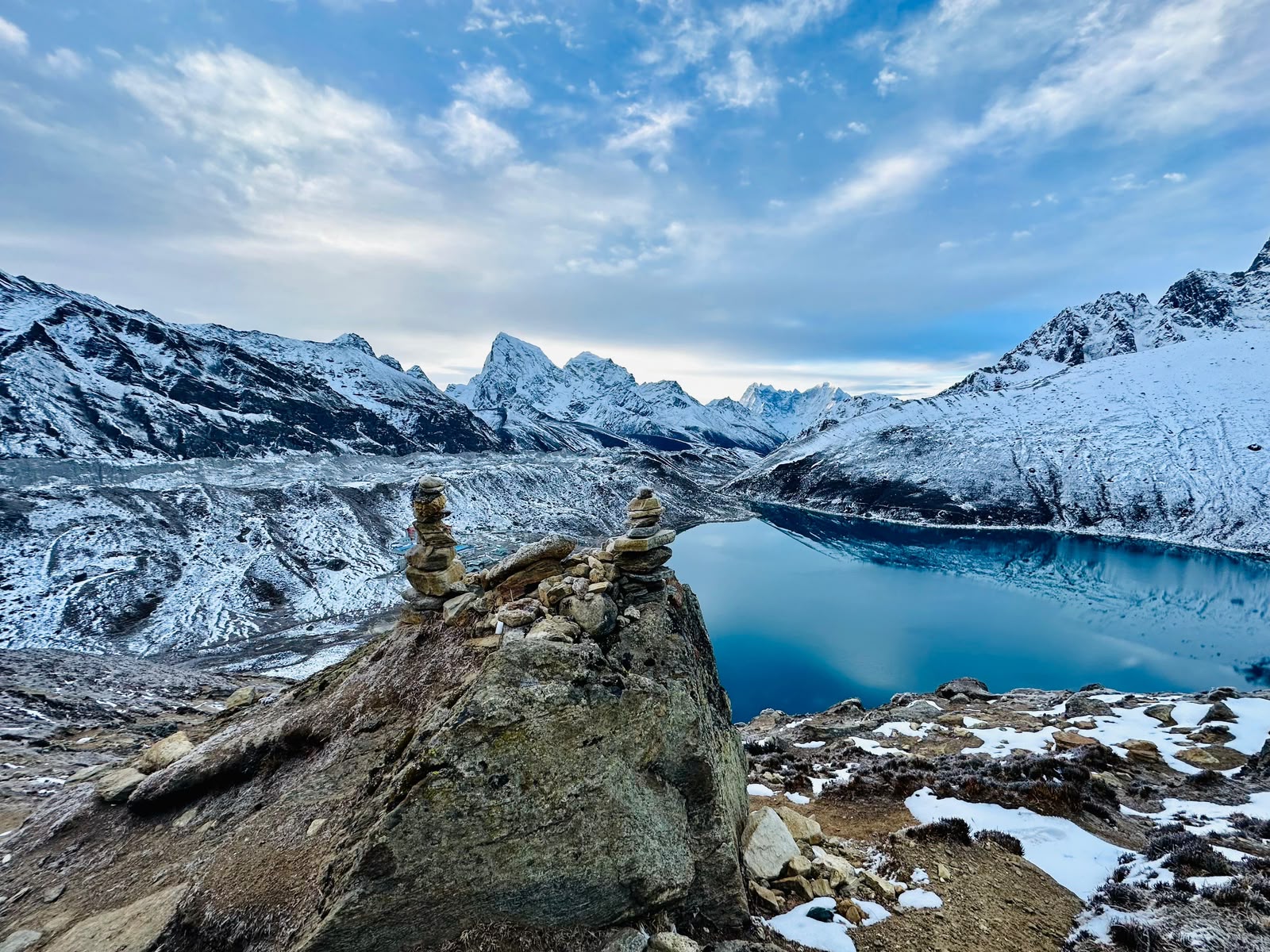
Follow the trail toward the Gokyo Valley, passing glacial terrain and the lower Gokyo Lakes. The route gradually climbs toward the turquoise lakes beneath the towering peaks of the Himalayas. Arrive at Gokyo village beside the lake and enjoy the remarkable mountain setting.
Enjoy the magnificent surroundings of Gokyo before continuing toward Thangnak, also known as Dragnag. The trail crosses rocky and glacial terrain near the Ngozumpa Glacier. Rest here before the demanding crossing of Cho La Pass the following day.
Begin early for one of the most challenging days of the trek. The route climbs across steep rocky slopes and potentially snowy or icy terrain to Cho La Pass. From the pass, enjoy impressive views of the surrounding Himalayan peaks before descending carefully toward Dzongla.
Snow, ice and weather can make this crossing difficult. Your guide may adjust the route or timing according to safety conditions.
Continue toward Lobuche and join the classic Everest Base Camp route. Walk through the rugged landscape of the Khumbu Glacier and follow the trail toward Gorak Shep. From there, trek to Everest Base Camp at 5,364m, where you can experience the dramatic glacial surroundings and views of the Khumbu Icefall area.
Start early for the ascent to Kala Patthar, one of the region’s best-known viewpoints for Mount Everest. The climb is steep and demanding at high altitude, but the summit rewards you with sweeping views of Everest, Nuptse, Pumori and surrounding peaks when visibility is clear.
Descend to Gorak Shep, then continue toward Lobuche.
Today brings another demanding high-altitude crossing. Start early and ascend toward Kongma La Pass, the highest of the two passes on this itinerary. The route involves steep ascents and descents over rocky, remote and potentially snow-covered terrain.
From the pass, descend toward the Imja Khola valley and continue to Chhukung. This is a long and strenuous day, and the crossing should only be attempted when weather, trail and group conditions are suitable.
Descend through the Imja Khola valley, passing Dingboche and familiar Sherpa settlements along the route. Continue through alpine landscapes and forested trails toward Namche Bazaar. After the demanding days at high altitude, enjoy a more comfortable evening in the lively mountain town.
Begin the final trekking day, descending through forested paths and crossing suspension bridges along the Dudh Koshi River. Pass through familiar villages before reaching Lukla. Celebrate the completion of your trek with your guide and trekking team.
Take a return flight to Kathmandu, subject to weather and operational conditions. On arrival, transfer to your hotel and enjoy free time to relax, shop for souvenirs or explore the city.
Mountain flights can be delayed or cancelled due to weather, so an additional buffer day is recommended when planning international departures.
After breakfast, transfer to Tribhuvan International Airport for your onward flight. Our team will assist with your departure arrangements according to your flight schedule.
Include/Excludes
Includes
- Airport pick-up and drop-off by private vehicle.
- Three nights of hotel accommodation in Kathmandu with breakfast, based on twin sharing.
- Thirteen nights of teahouse or lodge accommodation during the trek, according to the itinerary.
- Domestic flights between Kathmandu and Lukla, including applicable departure taxes, as specified in the confirmed package.
- Licensed English-speaking trekking guide.
- Porter service, generally one porter for every two trekkers, subject to the confirmed group arrangement.
- Guide and porter wages, meals, accommodation, insurance and necessary staff expenses.
- Breakfast, lunch and dinner during the trekking days.
- Welcome or farewell meal in Kathmandu, as specified in the confirmed package.
- Kathmandu Valley sightseeing with a guide and entrance fees, where included in the confirmed arrangement.
- Required trekking permits listed in the confirmed package.
- Down jacket and sleeping bag for use during the trek, to be returned after the trip if provided.
- Trekking duffel bag and company.
- Basic first-aid kit carried by the trekking team.
- Applicable government taxes and service charges.
Excludes
- International airfare to and from Nepal.
- Nepal visa fees.
- Travel insurance, including high-altitude trekking and emergency helicopter evacuation coverage.
- Personal trekking clothing, boots, sleeping accessories and other equipment not supplied by the company.
- Lunch and dinner in Kathmandu unless specifically included.
- Additional hotel nights caused by early arrival, late departure, flight delays or itinerary changes.
- Extra meals, snacks, bottled drinks, soft drinks, alcoholic beverages and specialty coffees.
- Hot showers, Wi-Fi, device charging and other personal lodge services where charged separately.
- Tips for guides, porters and other trekking staff.
- Personal expenses, laundry, souvenirs and telephone calls.
- Additional transportation or accommodation resulting from weather delays or changes outside the agreed package.
- Medical expenses, rescue and evacuation costs not covered by insurance.
- Any services not specifically listed under Cost Includes.
About Trips
Best Time for the Trek
The best seasons for the Gokyo, Cho La Pass, Everest Base Camp and Kongma La Pass Trek are spring (March–May) and autumn (September–November).
Spring: Generally offers milder temperatures, longer daylight and mountain scenery with flowering rhododendrons at lower elevations. Snow may remain on the high passes, especially earlier in the season.
Autumn: Often provides clear mountain views and relatively stable trekking conditions. October and November are popular months, so teahouses and flights can be busy.
Winter: Cold temperatures and snow can make both high passes difficult or inaccessible.
Monsoon: Rain, clouds, slippery trails and flight disruptions can affect the journey, particularly at lower elevations.
High-pass conditions vary every year. The guide must assess weather, snow and ice before attempting either crossing.
Trek Difficulty
This is a strenuous, high-altitude trek that is more demanding than the standard Everest Base Camp route. It combines long walking days, steep ascents and descents, remote trails and two high mountain passes.
Trekkers should be prepared for:
- Walking for around 5–9 hours on some days.
- Crossing Cho La Pass at approximately 5,330m.
- Crossing Kongma La Pass at approximately 5,535m.
- Walking over rocky, uneven, snowy or icy ground.
- Cold temperatures, wind and rapidly changing weather.
- Reduced energy and stamina at high altitude.
Previous multi-day trekking experience is strongly recommended. Technical climbing skills are not normally the objective of this trek, but good balance, sure-footedness and comfort on rugged terrain are important. Microspikes or other traction equipment may be necessary depending on conditions.
Physical Preparation
Prepare for at least 8–12 weeks before departure, adjusting the training period to your current fitness and trekking experience.
- Build cardiovascular fitness through hiking, stair climbing, cycling or running.
- Practise long hikes on consecutive days.
- Strengthen your legs, core and balance.
- Train with a daypack to get used to carrying your essentials.
- Break in your trekking boots before travelling.
- Discuss altitude-related health concerns and preventive medication with a qualified medical professional.
Fitness cannot eliminate the risk of altitude sickness. Walking at a controlled pace, eating and drinking adequately, and reporting symptoms early are essential.
Altitude and Acclimatization
This trek reaches elevations above 5,500m, where altitude-related illness can become serious. The itinerary includes an acclimatization day in Namche Bazaar, but acclimatization needs differ between individuals.
Your guide should monitor your condition and adjust the pace or itinerary when necessary. Headache, nausea, dizziness, unusual fatigue or loss of appetite can be symptoms of altitude sickness. Severe breathlessness at rest, confusion, loss of coordination or worsening symptoms require urgent medical attention and descent.
Never continue ascending when experiencing symptoms that may indicate altitude sickness. Emergency evacuation may be required in serious cases.
Accommodation
In Kathmandu, accommodation is generally provided in a hotel on a twin-sharing basis. During the trek, you will stay in local teahouses or mountain lodges.
Rooms in the mountains are usually simple, with twin beds, blankets and basic furniture. Bathroom facilities may be shared, and hot showers, charging and Wi-Fi may cost extra. Facilities become more basic at higher elevations, and availability varies by lodge and season.
Meals and Drinking Water
During trekking days, breakfast, lunch and dinner are generally provided under the full-board arrangement. Common options include Nepali dal bhat, noodles, rice, soup, potatoes, eggs, porridge and other simple meals. Availability becomes more limited at higher elevations.
Drink treated, boiled or properly filtered water. Avoid drinking untreated stream or tap water. Carry a reusable bottle and suitable water purification supplies to reduce plastic waste.
Permits and Entry Requirements
The trek generally requires the applicable Sagarmatha National Park entry permit and Khumbu Pasang Lhamu Rural Municipality entry permit. Permit procedures, documentation and fees may change, so requirements should be confirmed before departure.
Trekkers should carry a valid passport and any documents required for permits and domestic flights. The trekking company can assist with the permit process under the confirmed package.
Transportation
The itinerary includes airport transfers in Kathmandu and flights between Kathmandu and Lukla, according to the confirmed package.
Lukla flights are highly dependent on weather and operational conditions. Delays or cancellations can occur, and some services may operate through Ramechhap during certain periods. Any road transfers, additional accommodation or replacement flights should be clarified in the booking terms.
Allow a buffer before your international departure rather than relying on a same-day connection from Lukla.
Travel Insurance and Safety
Comprehensive travel insurance is essential. Confirm that your policy covers trekking at the itinerary’s maximum altitude, emergency medical treatment, helicopter evacuation and repatriation where applicable.
Follow your guide’s advice on weather, trail conditions, acclimatization and pass crossings. The guide may change the itinerary or postpone a crossing when conditions are unsafe. Your safety takes priority over completing the planned route.
Equipment Checklist
Recommended items include:
- Broken-in trekking boots with good grip.
- Warm base layers, fleece and insulated down jacket.
- Waterproof and windproof jacket and trousers.
- Warm gloves, hat, neck covering and thermal socks.
- Sunglasses with UV protection and high-SPF sunscreen.
- Trekking poles.
- Sleeping bag suitable for cold mountain nights.
- Headlamp with spare batteries.
- Daypack and waterproof cover.
- Reusable water bottles and water purification supplies.
- Personal medication and a small first-aid kit.
- High-altitude trekking equipment, such as microspikes, when recommended by your guide.
- Snacks, toiletries, passport copies and cash for personal expenses.
A detailed seasonal equipment list should be provided before departure.
Who Is This Trek For?
This trek is suitable for:
- Experienced hikers seeking a challenging Everest-region adventure.
- Trekkers who want to combine Gokyo Lakes with Everest Base Camp.
- Adventurers interested in crossing Cho La and Kongma La passes.
- Travellers with strong fitness and a flexible approach to mountain conditions.
- Photographers and mountain lovers seeking varied landscapes and panoramic views.
It is not the best choice for travellers seeking an easy trek, those without adequate preparation, or anyone unable to allow flexibility for high-pass conditions.
Why Choose Tibet Tours Nepal?
Tibet Tours Nepal can help arrange a guided Himalayan journey with support for permits, accommodation, domestic transport and trekking logistics. For this demanding itinerary, experienced guides, appropriate preparation and decisions based on actual trail conditions are especially important.
We aim to help travellers experience Nepal’s mountain landscapes and local culture while prioritizing safety and respecting the communities and natural environment along the route.
Book Your 17-Day Himalayan Adventure
Discover the Gokyo Lakes, cross two spectacular high mountain passes, and experience the legendary Everest Base Camp trail on one unforgettable journey through the Khumbu region.
Contact Tibet Tours Nepal to discuss departure dates, group size, inclusions and current trail conditions.
Frequently Asked Questions
General
The itinerary takes 17 days, including arrival and departure, Kathmandu sightseeing, trekking and domestic flights.
The highest scheduled point is Kala Patthar at approximately 5,545m. Kongma La Pass reaches about 5,535m, while Cho La Pass is approximately 5,330m.
It is strenuous and recommended for experienced trekkers with strong physical fitness. The two high passes, long trekking days and high altitude make it more challenging than the standard Everest Base Camp trek.
Previous multi-day trekking experience is strongly recommended. You should be comfortable walking for several hours a day over steep, uneven terrain and preparing for cold, high-altitude conditions.
Spring, from March to May, and autumn, from September to November, are generally the preferred seasons. Pass conditions still need to be assessed before and during the trek.
No. Snow, ice, weather and trail conditions can make Cho La or Kongma La unsafe or inaccessible. Your guide will decide whether a crossing is suitable, and an alternative route or schedule may be necessary.
Yes. The itinerary visits Gokyo Valley and its lakes before crossing Cho La Pass toward Everest Base Camp. It also includes a hike to Kala Patthar.
You will stay in a hotel in Kathmandu and local teahouses or lodges during the trek. Facilities are basic at higher elevations, and some services may cost extra.
Yes. You should have insurance that specifically covers high-altitude trekking, emergency medical treatment and helicopter evacuation at the maximum altitude of this itinerary.
Weather and operational conditions can delay or cancel flights. Additional accommodation, transport or flight arrangements may be needed, so allow extra time before your international departure.
It is not recommended as a first trek for most people. Beginners should consider a less demanding route first or obtain an honest assessment of their fitness, experience and preparation from the trekking company.