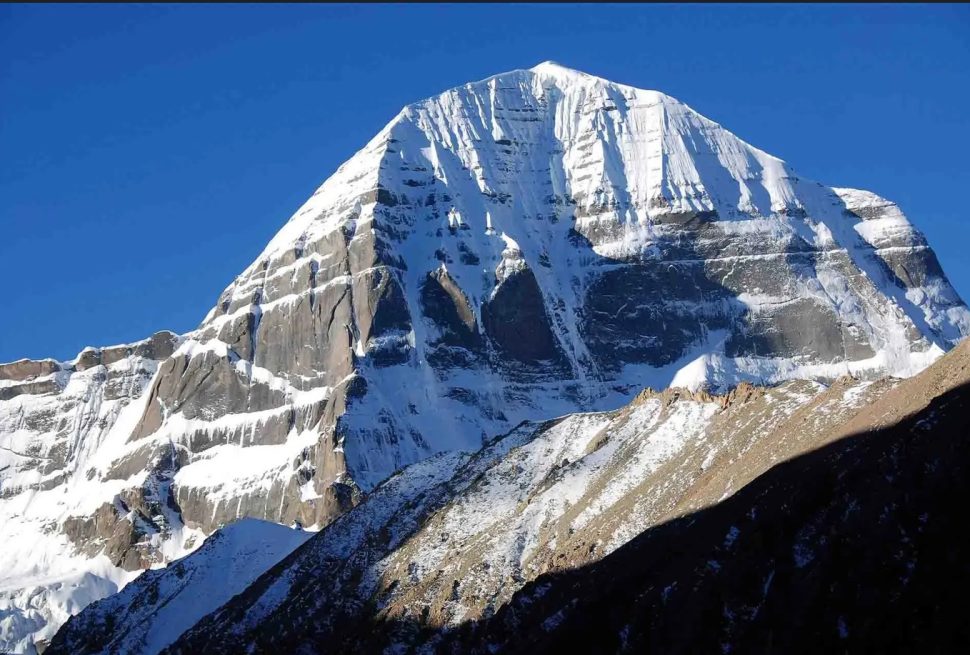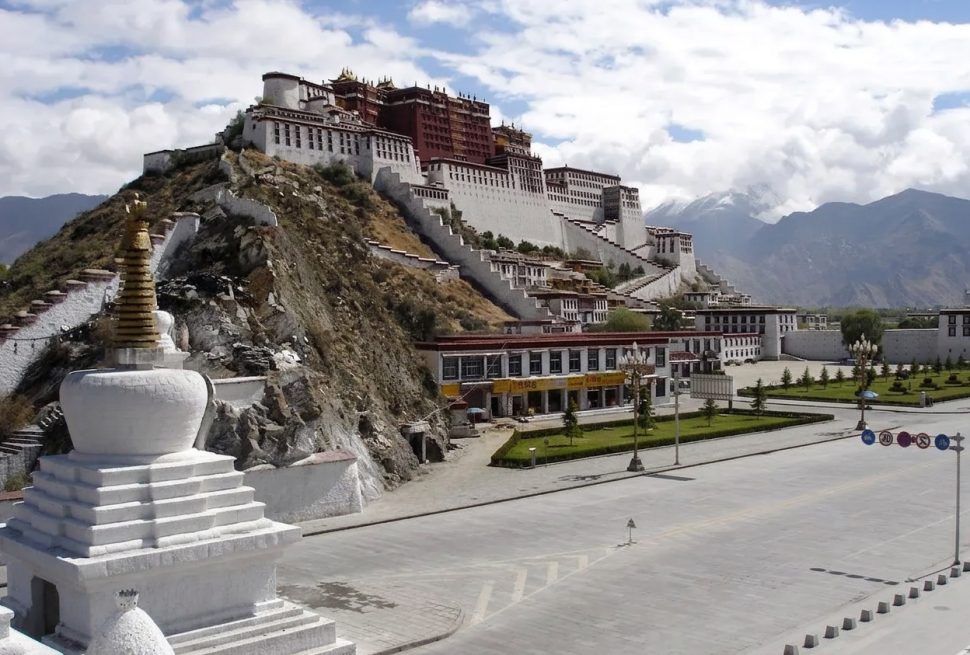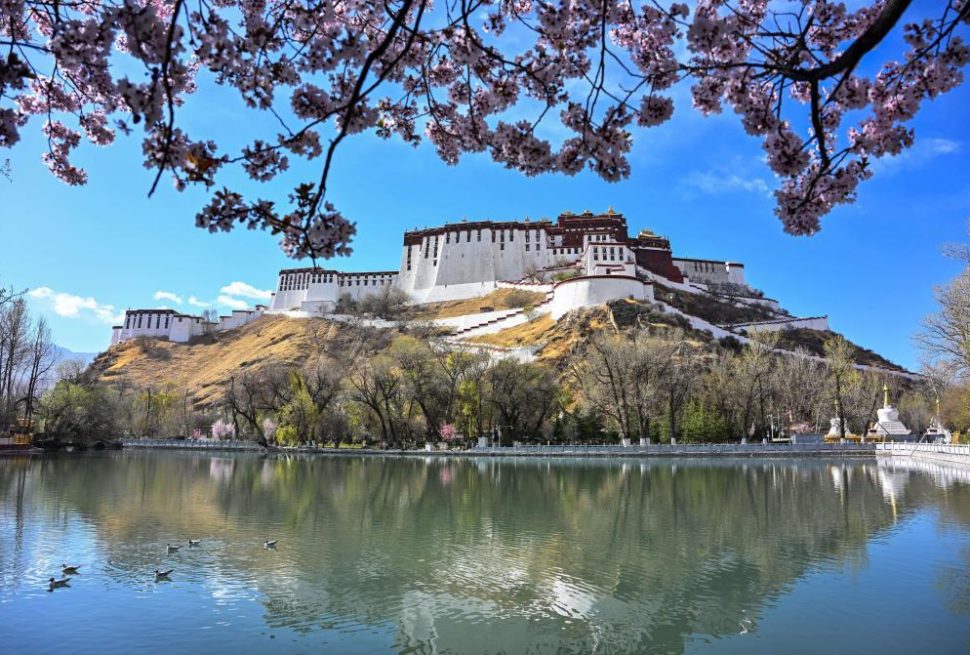


Mount Kailash and Lake Mansarovar sit in western Tibet, on a high plateau far from any city. Pilgrims have walked here for centuries, and today the route also draws spiritual seekers and trekkers from many countries.
A tour in 2027 means taking part in a living religious tradition. Mount Kailash is sacred to Hindus, Buddhists, Jains and followers of the Tibetan Bon religion. Lake Mansarovar, about 4,590 m above sea level, is nearby and holds its own religious meaning for pilgrims. Many travelers come for the faith, others for the scenery and the chance to reflect, and some for all of it. The traditional pilgrimage includes the Kailash Kora, a walk of roughly 52 km around the mountain that crosses the Drolma La pass at about 5,630 m.
The trip takes planning. The altitude is high, the area is remote, permits are required, and mountain conditions change. This guide covers the main sights, the best time to go, the route, preparation tips and what to check when planning a 2027 journey from Nepal.
Why Visit Mount Kailash and Lake Mansarovar in 2027?
Mount Kailash is one of the world’s most remarkable sacred mountains. Unlike many famous Himalayan peaks, it is not a conventional mountaineering destination. Its significance comes from the religious traditions, legends, and pilgrimage practices associated with the mountain.
The surrounding region offers a combination of spiritual heritage and extraordinary scenery. Travelers encounter high mountain passes, expansive plateaus, traditional settlements, prayer flags, monasteries, and the changing colors of the Tibetan landscape.
Here are some of the main reasons to consider this journey in 2027:
- Spiritual significance: Visit a destination deeply respected by several major religious traditions.
- Lake Mansarovar: Experience the serene surroundings of one of Tibet’s most sacred lakes.
- Kailash Kora: Walk the traditional pilgrimage circuit around Mount Kailash.
- Himalayan scenery: Discover dramatic mountain views, open valleys, and remote high-altitude landscapes.
- Tibetan culture: Learn about local customs, Buddhist traditions, and pilgrimage practices.
- Personal achievement: Complete a demanding journey that requires preparation, patience, and determination.
Whether you are traveling for religious reasons or to explore one of the Himalayas’ most distinctive destinations, the experience can be deeply memorable. However, the route is physically demanding, and high-altitude risks should never be underestimated.
The Spiritual Significance of Mount Kailash
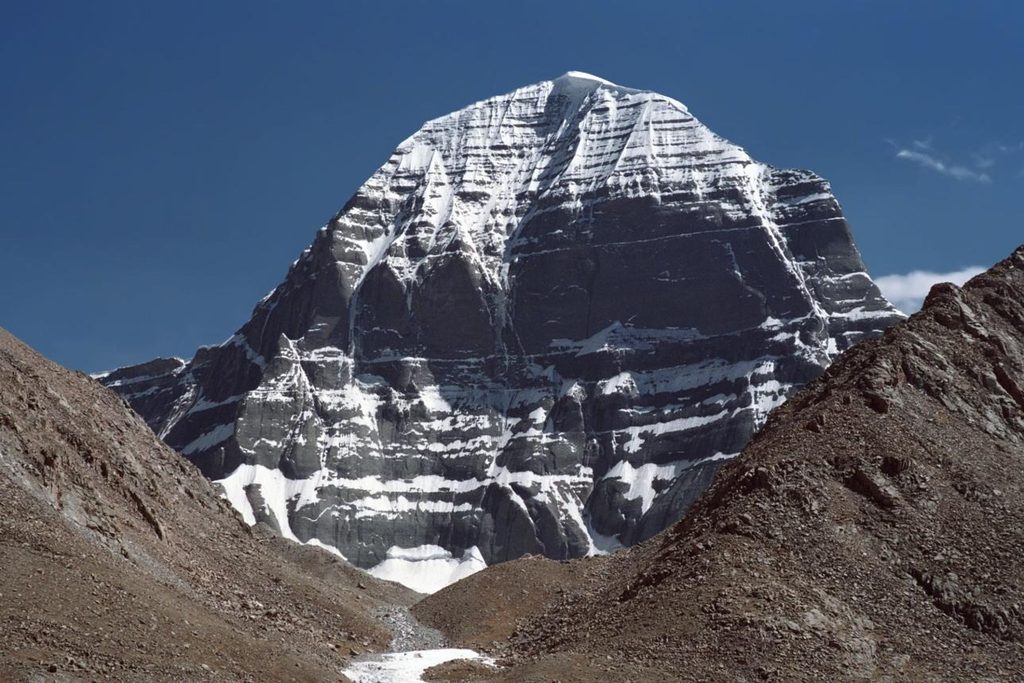
Mount Kailash rises to approximately 6,638 metres above sea level in the remote Ngari region of Tibet. Its distinctive shape and dramatic setting have made it an important spiritual landmark for centuries.
Mount Kailash in Hinduism
In Hindu tradition, Mount Kailash is regarded as the abode of Lord Shiva and Goddess Parvati. Many Hindu pilgrims believe that visiting the mountain is a profound act of devotion and an opportunity for spiritual reflection.
The pilgrimage is often associated with purification, dedication, and the pursuit of inner peace.
Mount Kailash in Buddhism
In Tibetan Buddhism, Mount Kailash is associated with sacred teachings and spiritual symbolism. Pilgrims traditionally walk around the mountain as an expression of devotion and a way to accumulate spiritual merit.
Significance in Jainism and Bon
Jain tradition associates the mountain with Rishabhadeva, the first Tirthankara. In the Tibetan Bon tradition, the mountain also holds a central place in its sacred geography and spiritual beliefs.
Although these traditions have different interpretations, they share a profound respect for the mountain.
Important: Mount Kailash is generally visited through pilgrimage and circumambulation, not by climbing its summit. The mountain’s spiritual significance is central to the experience.
Lake Mansarovar: A Sacred Himalayan Lake
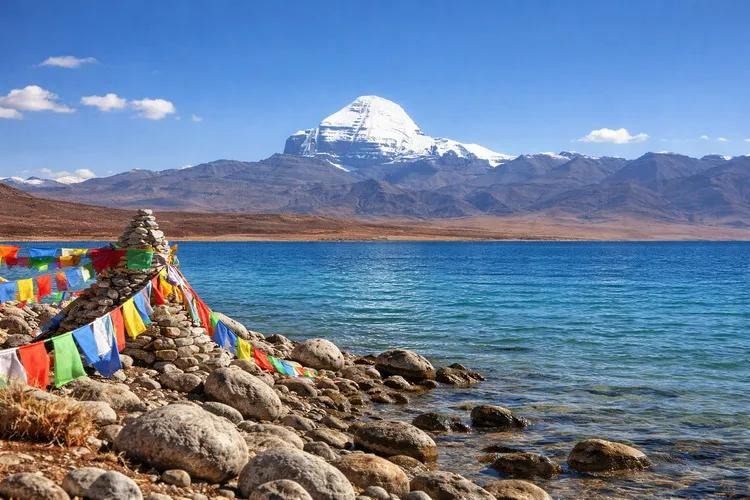
Lake Mansarovar, also known as Manasarovar, lies near Mount Kailash on the Tibetan Plateau. Its clear waters, open shoreline, and surrounding mountain landscapes make it one of the most memorable stops on the pilgrimage.
For many Hindu pilgrims, the lake represents spiritual purity and is closely connected with religious stories and sacred traditions. Buddhist pilgrims also recognize the region’s spiritual importance.
During a visit, travelers may have the opportunity to:
- Enjoy views across the lake toward the surrounding mountains.
- Spend quiet time in reflection or prayer.
- Observe traditional pilgrimage practices.
- Photograph the lake and the vast Tibetan landscape.
- Learn about the cultural and religious significance of the region.
Some pilgrims choose to perform religious rituals or bathe in the lake. These practices are personal choices, and visitors should respect local regulations, environmental conditions, and the needs of other pilgrims. The water can be extremely cold, and immersion is not necessary to appreciate the site.
Lake Mansarovar is also situated at high altitude, so visitors should avoid unnecessary physical exertion and follow their guide’s advice.
Best Time for a Mount Kailash and Lake Mansarovar Tour in 2027
Choosing the right season is important for a successful pilgrimage. The region experiences a harsh high-altitude climate, and access, road conditions, and tour operations can change with the weather.
The main travel period is generally during the warmer months, from late spring through early autumn. Exact opening dates and conditions for 2027 should be confirmed before booking.
May to June — Early pilgrimage season
The landscape may still have substantial snow, particularly at higher elevations. These months can appeal to travelers seeking a quieter atmosphere, but weather and access conditions require careful confirmation.
July to August — Main summer season
These months fall within the generally warmer travel period. Conditions can still change quickly, with rain, wind, and reduced visibility possible. Confirm the operating schedule and route conditions before departure.
September to early October — Autumn conditions
Clear days may provide excellent mountain views, but temperatures can fall sharply, especially at night. Late-season availability depends on local conditions and operator arrangements.
When should you book?
For a 2027 departure, start planning several months ahead, particularly if you have fixed dates or need to coordinate international flights, visas, permits, and accommodation.
Saga Dawa, an important festival in the Tibetan Buddhist calendar, attracts pilgrims to Mount Kailash. Its dates vary according to the traditional calendar, so check the confirmed 2027 dates if you want to travel during the festival.
There is no guarantee of suitable weather or unrestricted access in any particular month. Your tour operator should reconfirm the departure schedule and local conditions before your trip.
Mount Kailash Kora: The Sacred Circumambulation
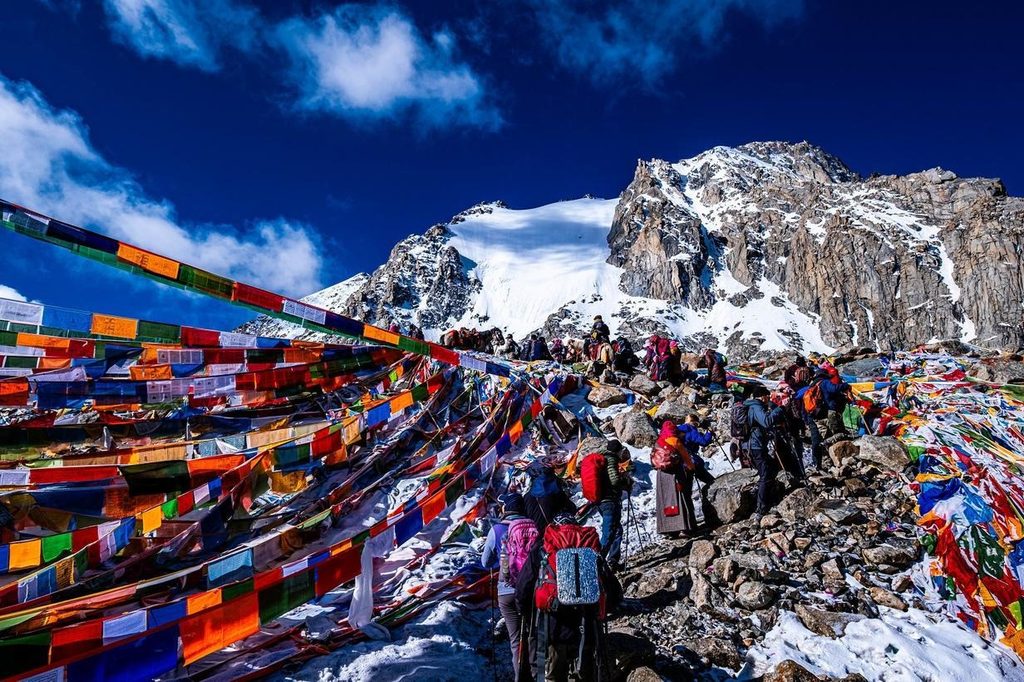
The Kailash Kora is the traditional circuit around Mount Kailash. It is one of the most important parts of the pilgrimage for many travelers.
The full circuit is approximately 52 kilometres, depending on the route and measurements used. It is commonly completed over three days, although the schedule varies according to fitness, acclimatization, weather, and the tour arrangement.
What happens during the Kailash Kora?
Day 1: Begin the pilgrimage
Travelers typically start from the Darchen area and walk toward the overnight stop near Dirapuk Monastery. The route passes through a dramatic valley with views of the sacred mountain.
Day 2: Cross the high pass
The second day is usually the most demanding. The route crosses Dolma La Pass, at approximately 5,630 metres, before descending toward the next overnight stop. High altitude, steep sections, cold temperatures, and changing weather make this a challenging day.
Day 3: Complete the circuit
Travelers continue toward the end of the circuit and return to the Darchen area. The distance and duration depend on the route conditions and the group’s pace.
This is a general description rather than a guaranteed itinerary. The overnight stops, route, and walking schedule must be confirmed with the operator.
Is the Kailash Kora difficult?
Yes. The Kora is a demanding high-altitude trek, even for people who exercise regularly. The combination of thin air, long walking days, uneven terrain, and unpredictable weather can make it significantly harder than a hike at lower elevations.
You should prepare by:
- Building cardiovascular fitness and walking endurance before departure.
- Practising longer walks on uneven terrain.
- Allowing sufficient time for acclimatization.
- Carrying suitable layers, waterproof clothing, and sturdy walking boots.
- Following your guide’s instructions and never rushing to keep up with others.
A horse or porter may be available on some itineraries or sections, subject to local arrangements. Do not assume these services will be available throughout the circuit, particularly at the most difficult sections.
If you develop symptoms of altitude sickness, inform your guide immediately. Severe symptoms require urgent medical assessment and descent.
Travel Permits and Entry Requirements for Tibet in 2027
Travel documents are an essential part of planning a Mount Kailash and Lake Mansarovar tour. Requirements depend on your nationality, how you enter China, and the current rules for foreign visitors to Tibet.
For many international travelers entering Tibet from Nepal, arrangements may include a Chinese visa or applicable entry authorization, a Tibet Travel Permit, and additional permissions for restricted areas such as the Mount Kailash region. Travelers entering from Nepal may be subject to different visa procedures from those entering mainland China.
Before booking your 2027 tour, confirm the following with your tour operator and the relevant authorities:
- Passport validity: Check the required validity period and available passport pages.
- Chinese visa or entry authorization: Confirm the procedure applicable to your nationality and route.
- Tibet Travel Permit: Verify the permit requirements for your planned itinerary.
- Restricted-area permits: Confirm which additional permissions are required for the Ngari region and Mount Kailash.
- Border arrangements: Check the designated crossing, operating schedule, and transfer arrangements.
- Application deadlines: Allow sufficient time for document collection and processing.
Permit requirements and processing times can change. Do not assume that a visa or permit obtained for a previous trip will cover a new itinerary.
A specialist tour operator can explain the applicable process, coordinate the necessary applications where authorized, and advise which documents you need to provide.
Altitude, Health, and Safety Considerations
The Mount Kailash region is remote and lies at extreme altitude. Lake Mansarovar is approximately 4,590 metres above sea level, while the Kailash Kora crosses Dolma La Pass at around 5,630 metres.
At these elevations, less oxygen is available with each breath. Acute mountain sickness can affect even healthy, physically fit travelers, and serious altitude-related illness can become life-threatening.
How to prepare for high altitude
Give yourself time to acclimatize. A good itinerary climbs gradually and builds in rest days before the Kora, so ask your operator to show you the day-by-day altitude plan.
See a doctor before you go, especially if you have a heart or lung condition or have had altitude sickness before.
Know the early signs of altitude sickness: headache, nausea, dizziness, unusual tiredness and loss of appetite. Confusion, trouble walking in a straight line and breathlessness while resting are serious. If you feel unwell, stop climbing and tell your guide. If symptoms get worse, descend as soon as it is safe and get medical help.
Medical care is far away on this route, and weather or road conditions can delay an evacuation. Check that your travel insurance covers trekking at high altitude, emergency evacuation and every activity on your itinerary.
Preparation lowers the risks but does not remove them. If your health is at stake, turn back, because finishing the pilgrimage is not worth it.
What to Pack for the Kailash Mansarovar Yatra
The weather can change rapidly across the Tibetan Plateau. Even during the warmer season, nights and high mountain passes can be very cold.
Use this checklist when preparing for your trip.
- Warm down jacket or insulated outer layer
- Thermal base layers and fleece
- Waterproof and wind-resistant jacket and trousers
- Comfortable, well-broken-in trekking boots
- Warm socks and spare clothing
- Gloves, a warm hat, and sun protection
- Sunglasses suitable for strong high-altitude sunlight
- Sunscreen and lip balm
- Daypack and reusable water bottle
- Personal medications and basic first-aid supplies
- Headlamp and spare batteries
- Passport, travel documents, and copies of permits
- Suitable snacks and any personal dietary essentials
Your operator should provide a final packing list based on the season, accommodation, walking arrangements, and confirmed itinerary. Pack for cold conditions even if Kathmandu is warm when you depart.
How Much Does a Mount Kailash and Lake Mansarovar Tour Cost in 2027?
The cost of a Mount Kailash and Lake Mansarovar tour depends on the route, trip duration, group size, accommodation, transportation, permits, and services included.
There is no single price that applies to every traveler. A tour departing from Kathmandu may have a different cost structure from a journey entering Tibet through another country.
When comparing packages, ask whether the quoted price includes:
- Transportation from the agreed starting point
- Accommodation throughout the itinerary
- Meals specified in the package
- Guide and group-support services
- Applicable permits and processing arrangements
- Border transfers and local transportation
- Support during the Kailash Kora
- Emergency procedures and evacuation arrangements
Also ask about exclusions, such as international flights, personal expenses, travel insurance, tips, and any optional services.
Booking tip: Request a written quotation for your preferred 2027 departure, with a clear breakdown of inclusions, exclusions, cancellation terms, and any additional charges. This makes it easier to compare packages fairly rather than choosing solely on the lowest advertised price.
Who Should Consider This Journey?
A Mount Kailash and Lake Mansarovar tour may suit:
- Hindu pilgrims visiting the sacred abode associated with Lord Shiva.
- Buddhist travelers interested in pilgrimage and Tibetan spiritual traditions.
- Jain and Bon practitioners wishing to visit an important sacred landscape.
- Travelers interested in Himalayan culture, religion, and remote landscapes.
- Experienced walkers who understand the demands of high-altitude travel.
This journey is not suitable for everyone. The long road transfers, limited facilities, extreme altitude, and demanding Kora can be challenging for travelers with limited mobility or health conditions that increase their risk at altitude.
If you are uncertain about your fitness or medical suitability, seek professional medical advice before committing to a departure.
Why Book Your Mount Kailash Tour with Tibet Tours Nepal?
Getting to western Tibet takes more than a bus and a bed. Someone has to sort out your travel documents, the border crossing, the long drives, and local arrangements at altitude, so you want an operator that has done this before. Look for one that answers your questions clearly, gives a price you can understand, and proposes an itinerary that is realistic about the distances and the altitude.
Tibet Tours Nepal runs Mount Kailash and Lake Mansarovar journeys, and you can enquire about dates, travel arrangements and group size.
Before you confirm any booking, ask for the full itinerary, a list of what is and isn’t included, how permits will be arranged, the acclimatization schedule and the emergency support plan.
Start early for 2027. It gives you time to get your documents in order, book flights, talk to your doctor about your fitness, and pick a departure date that suits you.
Plan Your Mount Kailash and Lake Mansarovar Tour for 2027
A pilgrimage to Mount Kailash and Lake Mansarovar is an opportunity to experience one of the Himalayas’ most sacred landscapes, discover Tibetan traditions, and undertake a meaningful personal journey.
With careful preparation, a suitable itinerary, and attention to altitude and travel requirements, you can begin planning this extraordinary experience with greater confidence.
Ready to plan your 2027 journey? Contact Tibet Tours Nepal to discuss your preferred dates, itinerary, and travel arrangements.
- Website: Tibet Tours Nepal
Frequently Asked Questions (FAQs)
1. When is the best time to visit Mount Kailash and Lake Mansarovar in 2027?
The main travel season is generally from late spring through early autumn. May to September is a useful starting point for planning, but exact departure dates depend on weather, access, permits, and the tour operator’s confirmed schedule.
2. How many days are needed for the Kailash Mansarovar tour from Nepal?
A tour commonly takes around 10–16 days or longer, depending on the route, border arrangements, acclimatization schedule, and whether the Kailash Kora is included. A 14-day itinerary is one possible planning framework, not a guaranteed duration.
3. How long is the Mount Kailash Kora?
The traditional circuit is approximately 52 kilometres. It is often completed over three days, with the second day typically the most demanding because of the high Dolma La Pass.
4. Do I need a permit to visit Mount Kailash?
Foreign travelers generally require the relevant Tibet travel permissions, and additional permits may apply to the restricted Mount Kailash region. Entry and visa requirements depend on nationality and travel route. Confirm the current requirements for your 2027 departure before booking
5. Is the Mount Kailash tour physically difficult?
Yes. The journey includes long road transfers, high-altitude travel, and potentially strenuous walking. The Kora involves uneven terrain and a high mountain pass. Fitness preparation and gradual acclimatization are important, but neither guarantees protection from altitude sickness.
6. Can I visit Lake Mansarovar without completing the Kailash Kora?
Depending on the tour arrangement, access permissions, and local conditions, it may be possible to visit Lake Mansarovar without completing the full circuit. Discuss your mobility, preferences, and travel requirements with the operator before booking.
7. Can senior citizens join the Kailash Mansarovar tour?
Some senior travelers may be able to participate, but age alone cannot determine whether the journey is appropriate. The high altitude and remote setting require careful medical assessment. Consult a healthcare professional and ask the operator about a suitable itinerary before confirming.
8. What should I bring for the pilgrimage?
Bring warm and waterproof clothing, sturdy walking boots, sun protection, personal medications, travel documents, and a comfortable daypack. Your operator should provide a more detailed list based on the confirmed season and itinerary.
9. Is travel insurance necessary for the Kailash Mansarovar tour?
Travel insurance that explicitly covers high-altitude travel and emergency evacuation is strongly recommended. Check the policy limits, altitude restrictions, and exclusions carefully, as ordinary travel insurance may not cover every activity or emergency.
10. How can I book a Mount Kailash and Lake Mansarovar tour for 2027?
Contact Tibet Tours Nepal with your preferred travel month, nationality, group size, and approximate duration. Ask for a detailed quotation, the applicable visa and permit process, confirmed inclusions, and the proposed departure schedule.